



Histamine Receptor
Histamine Receptors are a class of G protein-coupled receptors with histamine as their endogenous ligand. There are four known histamine receptors: H1 receptor, H2 receptor, H3 receptor, H4 receptor. The H1 receptor is a histamine receptor belonging to the family of Rhodopsin-like G-protein-coupled receptors. This receptor, which is activated by the biogenic amine histamine, is expressed throughout the body, to be specific, in smooth muscles, on vascular endothelial cells, in the heart, and in the central nervous system. H2 receptors are positively coupled to adenylate cyclase via Gs. It is a potent stimulant of cAMP production, which leads to activation of Protein Kinase A. Histamine H3 receptors are expressed in the central nervous system and to a lesser extent the peripheral nervous system, where they act asautoreceptors in presynaptic histaminergic neurons, and also control histamine turnover by feedback inhibition of histamine synthesis and release. The Histamine H4 receptor has been shown to be involved in mediating eosinophil shape change and mast cell chemotaxis.
Histamine Receptor Isoform Specific Products
All Product Categories
-
Histamine Receptor Inhibitors
(197)
View all products
-
Histamine Receptor Agonists
(66)
View all products
-
Histamine Receptor Antagonists
(495)
View all products
-
Histamine Receptor Activators
(5)
View all products
-
Histamine Receptor Modulators
(20)
View all products
-
Histamine Receptor Controls
(9)
View all products
-
Histamine Receptor Ligands
(2)
View all products
-
Histamine Receptor Related Products (860)
Related Products (860)

-
Antibodies (2)
-
Histamine Receptor Isoform Comparison
-
Meclizine dihydrochloride (Standard)
 0 ImagesMeclizine (dihydrochloride) (Standard) is the analytical standard of Meclizine (dihydrochloride). This product is intended for research and analytical applications. Meclizine (Meclozine) dihydrochloride, an antihistamine, reversibly inhibits the interaction of histamine at the H1 receptors. Meclizine dihydrochloride is a member of the piperazine class of H1 antagonists. Meclizine dihydrochloride is an effective anti-motion sickness agent. Meclizine dihydrochloride crosses the blood-brain barrier. Meclizine dihydrochloride can be used for the research of polyQ toxicity disorders, such as Huntington's disease. Meclizine dihydrochloride is an agonist ligand for mouse constitutive androstane receptor (CAR) and an inverse agonist for Human CAR.
-
Diphenylpyraline (Standard)
 0 ImagesCat. No.: HY-107431RCAS No.: 147-20-6Diphenylpyraline (Standard) is the analytical standard of Diphenylpyraline. This product is intended for research and analytical applications. Diphenylpyraline is a potent histamine H1?receptor antagonist. Diphenylpyraline acts as an orally active antihistamine agent?with antimuscarinic and antiallergic effects. Diphenylpyraline can be used for the research of allergic diseases, including rhinitis and hay fever, and pruritic skin disorders et.al.
-
Alinastine
 0 ImagesCat. No.: HY-101678CAS No.: 154541-72-7Alinastine is a new antihistamine agent.
-
BP 2-94
 0 ImagesCat. No.: HY-137090CAS No.: 139191-80-3Synonyms: BP 2.94BP 2-94 (BP 2.94) is an orally active and highly selective prodrug targeting the histamine H3 receptor. BP 2-94 exerts anti-inflammatory, analgesic and antinociceptive effects by inhibiting histamine release and modulating neurogenic inflammation. BP 2-94 is promising for research of asthma, migraines, and inflammatory pain-related disorders.
-
Ranitidine-d6
 0 ImagesCat. No.: HY-B0693SCAS No.: 1185514-83-3Ranitidine-d6 is the deuterium labeled Ranitidine (HY-B0693). Ranitidine is a potent, selective and orally active histamine H2-receptor antagonist that inhibits gastric secretion. Ranitidine antagonizes Histamine (HY-B1204)-induced increases of the guinea-pig isolated rat atrium and Histamine-induced relaxations of the rat isolated uterine horn, with pA2 values of 7.2 and 6.95, respectively. Ranitidine inhibits breast tumor development and spread in mice.
-
Propiomazine-d6 hydrochloride
 0 ImagesCat. No.: HY-U00051ASPropiomazine-d6 hydrochloride is deuterium labeled Propiomazine hydrochloride. Propiomazine hydrochloride is an orally active antihistamine agent. Propiomazine hydrochloride is a potent prolactin (PRL) release stimulant, whose effect depends on the antagonism of the dopaminergic system and can inhibit the secretion of luteinizing hormone (LH). Propiomazine hydrochloride is mainly used for anesthesia assistance, mental disorders and anxiety-induced sedation, and can also be used in research related to insomnia.
-
H1R ligand-1
 0 ImagesCat. No.: HY-170789CAS No.: 19642-70-7H1R ligand-1 (Compound fragment 1) is a high-affinity ligand for the human histamine H1 receptor (H1R). H1R ligand-1 can be used as a scaffold to design and synthesize a set of derivatives to explore H1R binding kinetics.
-
Histamine-13C5, 15N3
 0 ImagesCat. No.: HY-B1204S2Synonyms: Ergamine-13C5, 15N3Histamine-13C5, 15N3 (Ergamine-13C5, 15N3) is the 13C and 15N labeled isotope of Histamine (HY-B1204). Histamine is the agonist for histamine receptor and a vasodilator. Histamine is an organic nitrogen compound that participates in local immune responses, regulates intestinal physiological functions, and acts as a neurotransmitter. Histamine affects p38 MAPK/Akt signaling pathway, exhibits antitumor, antioxidant and anti-inflammatory activities. Histamine can be used in the research of acute myeloid leukemia, malignant melanoma, and renal cell carcinoma.
-
Tribenoside (Standard)
 0 ImagesCat. No.: HY-108249RCAS No.: 10310-32-4Tribenoside (Standard) is the analytical standard of Tribenoside. This product is intended for research and analytical applications. Tribenoside is a vasoprotective agent, can be used for the research of hemorrhoids. Tribenoside has mild anti-inflammatory, analgesic, and wound healing properties.
-
Doxylamine
 0 ImagesDoxylamine is a first-generation antihistamine and acts as a histamine H1 receptor antagonist. Doxylamine is orally active, possessing analgesic and hypnotic activities. Doxylamine enhances the activities of CYP2B, CYP2A, CYP3A and thyroxine-glucuronosyltransferase via promoting substrate hydroxylation and thyroxine metabolic pathways. Doxylamine decreases serum thyroxine (T4) level and elevates serum thyroid-stimulating hormone (TSH) level. Doxylamine induces liver enlargement and increases the activities of hepatic microsomal cytochrome P450, cytochrome b5 and NADPH-cytochrome c reductase. Doxylamine can be used for the research of nausea, allergy, insomnia.
-
Olopatadine hydrochloride (Standard)
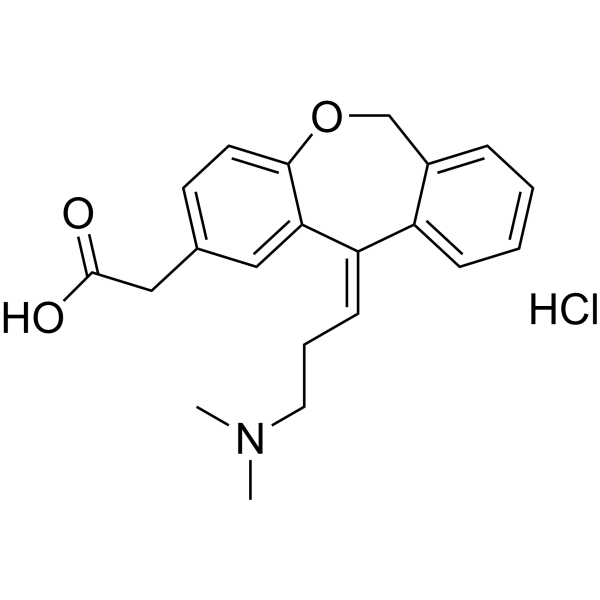 0 ImagesSynonyms: ALO4943A (Standard); KW4679 (Standard)Olopatadine (hydrochloride) (Standard) is the analytical standard of Olopatadine (hydrochloride). This product is intended for research and analytical applications. Olopatadine hydrochloride (ALO4943A; KW4679) is an orally active histamine H1 receptor antagonist and mast cell stabilizer. Olopatadine hydrochloride exerts antiallergic effects by blocking histamine H1 receptor-mediated activities. Olopatadine hydrochloride inhibits exocytosis, chemokine release, F-actin polymerization, CXCL10-induced calcium influx, and T cell chemotactic activity. Olopatadine hydrochloride also reduces the expression levels of CXCR3 on the surface of CD4+ and CD8+ T cells. Olopatadine hydrochloride inhibits scratching behavior, improves dermatitis scores, and suppresses intraepidermal neurite outgrowth. Olopatadine hydrochloride simultaneously decreases the levels of inflammatory markers, growth factors, histamine, and specific IgE, while increasing the expression of ErbB3A/HER3A. Olopatadine hydrochloride can be used in research related to seasonal pollinosis, chronic rhinitis, urticaria, allergic conjunctivitis, alopecia areata, and atopic dermatitis.
-
Linetastine
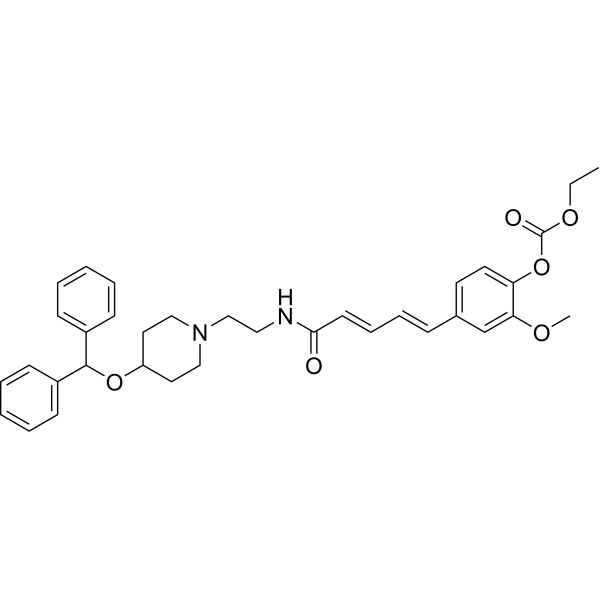 0 ImagesCat. No.: HY-123103CAS No.: 159776-68-8Linetastine is an orally active and potent 5-Lipoxygenase inhibitor. Linetastine shows antihistamine activity. Linetastine inhibits leukotriene production and antagonizes the effect of histamine. Linetastine inhibits the release of leukotrienes B4 and C4 from calcium ionophore-stimulated human leukocytes.
-
Ciproxifan hydrochloride
 0 ImagesCat. No.: HY-14567ACAS No.: 1049741-81-2Synonyms: FUB-359 hydrochlorideCiproxifan (FUB 359) hydrochloride is a potent, selective, orally bioavailable and competitive antagonist of histamine H3-receptor, with an IC50 of 9.2 nM. Ciproxifan hydrochloride displays low apparent affinity at other receptor subtypes. Ciproxifan hydrochloride can be used for the research of aging disorders and Alzheimer's disease.
-
N-Acetylhistamine (Standard)
 0 ImagesSynonyms: N-Omega-acetylhistamine (Standard)Ethacridine (lactate monohydrate) (Standard) is the analytical standard of Ethacridine (lactate monohydrate). This product is intended for research and analytical applications. Ethacridine lactate (Acrinol) monohydrate is a widely used antiseptic and abortifacient. Ethacridine lactate monohydrate is effective against Staphylococcus aureus and other gram-positive cocci. Ethacridine lactate monohydrate is also a poly(ADP-ribose) glycohydrolase (PARG) inhibitor.
-
Papaveraldine
 0 ImagesPapaveraldine (Xanthaline) is a benzylisoquinoline alkaloid that shows antispasmodic and protective activity against histamine-induced bronchospasm in rats. Papaveraldine is an active ingredient of a hair tonic preparation that promotes melanin formation for grey hair.
-
Dioxopromethazine
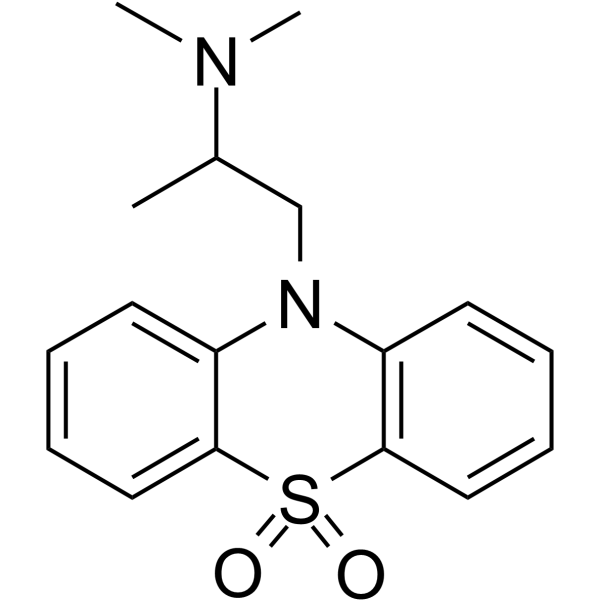 0 ImagesCat. No.: HY-107787CAS No.: 13754-56-8Synonyms: Prothanon; 9,9-Dioxopromethazine; 9,9-DioxypromethazinDioxopromethazine is an orally active antihistamine. Dioxopromethazine inhibits asthmatic symptoms.
-
Dexbrompheniramine maleate
 0 ImagesSynonyms: (+)-Brompheniramine maleate; (S)-Brompheniramine maleateDexbrompheniramine ((+)-Brompheniramine; (S)-Brompheniramine) maleate is a dual inhibitor of histamine H1 receptor and TRPV1 receptor that can cross the blood-brain barrier. Dexbrompheniramine maleate exerts its effects by functionally blocking H1 receptor activity and dose-dependently inhibiting TRPV1-mediated calcium responses, including Capsaicin (HY-10448)-induced responses. The combination of Dexbrompheniramine maleate with Cimetidine (HY-14289) eliminates histamine-induced and sham-feeding-induced drinking behavior, whereas Dexbrompheniramine maleate alone does not induce thirst or alter sham-feeding behavior in rats. Dexbrompheniramine maleate can be used in the research of chronic cough and related pathological mechanisms.
-
Embramine hydrochloride
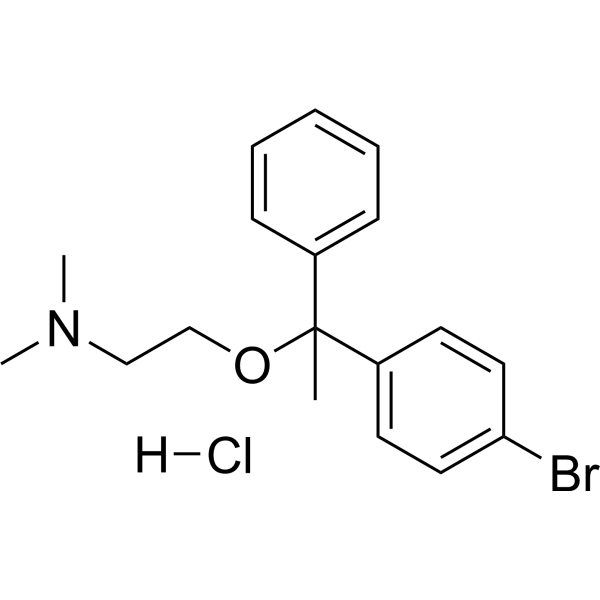 0 ImagesCat. No.: HY-U00132ACAS No.: 13977-28-1Embramine (hydrochloride) is a monoethanolamine used as an antihistamine and anticholinergic.
-
AChE/BChE-IN-21
 0 ImagesCat. No.: HY-168031CAS No.: 2756368-79-1AChE/BChE-IN-21 is a histamine H3 receptor antagonist, calcium channel blocker, and acetylcholinesterase inhibitor. AChE/BChE-IN-21 exhibits neuroprotective activity against H2O2 and Aβ1-40, and can restore cognitive function in AD mice.
-
Cetirizine-d8 dihydrochloride
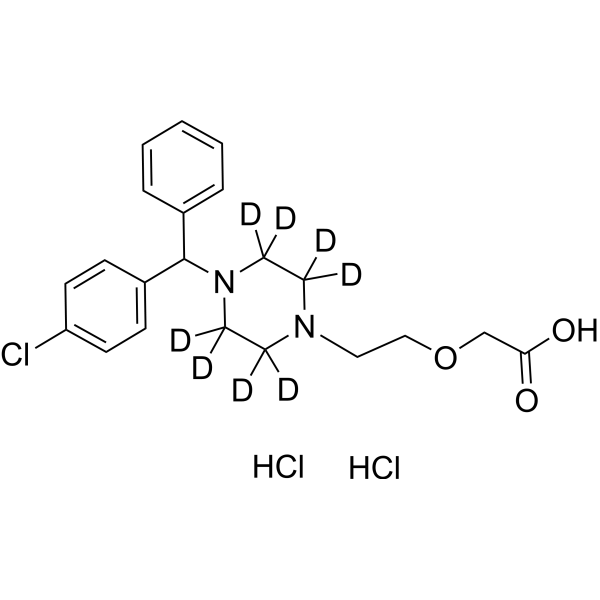 0 ImagesCat. No.: HY-17042AS1CAS No.: 2070015-04-0Cetirizine-d8 (dihydrochloride) is a deuterium labeled Cetirizine. Cetirizine, a second-generation antihistamine and the carboxylated metabolite of hydroxyzine, is a specific, orally active and long-acting histamine H1-receptor antagonist. Cetirizine marks antiallergic properties and inhibits eosinophil chemotaxis during the allergic response.




